
What industries are emulsifiers commonly used in?
Feb 13, 2023
Emulsifiers are substances that help mix two immiscible substances, such as oil and water, to form a stable emulsion. Emulsifiers have a wide variety of applications, including:
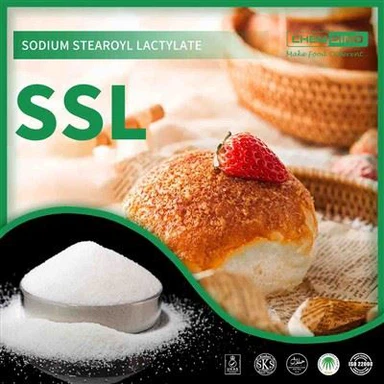
Bread: Bread can be made without emulsifiers, but the result is usually dry, low in volume, and prone to staleness. Adding as little as 0.5% emulsifier to the dough is enough to achieve greater volume, a softer crumb structure, and a longer shelf life. There are two types of emulsifiers used in bread: dough strengtheners such as diacetyl tartrate (E472e) and sodium or calcium stearyl-2-lactate (E481, E482) and dough softeners such as fatty acids Mono- and diglycerides (E471)). Dough strengtheners make the dough stronger and result in bread with better texture and volume. Dough softeners allow for a softer crumb structure and increased shelf life.

Chocolate: All chocolate products contain 0.5% lecithin (E322) or ammonium phosphatidylcholine (E442). These emulsifiers are added to give the chocolate the correct consistency, so it can be molded into plates of chocolate, chocolate bars, etc.
Ice Cream: Both foam and emulsion contain ice crystals and an unfrozen water-based mixture. Emulsifiers are added during freezing to promote a smoother texture and to ensure that the ice cream does not melt quickly after serving. Can improve freeze-thaw stability. Mono- and diglycerides of fatty acids (E471), lecithin (E322), and polysorbates (E432, E436) are commonly used in ice cream production.
Margarine: Emulsifiers give margarine the desired stability, texture, and taste. To ensure fine dispersion of water droplets in the oil phase, mono- and diglycerides of fatty acids (E471) and lecithin (E322) are widely used.
Processed Meat: The main components of sausage are meat protein, fat, and water, which are held together in a stable emulsion. Emulsifiers stabilize this emulsion and distribute the fat finely throughout the product. The food industry uses mono- and diglycerides of fatty acids (E471) and citric acid esters (E472c) to make processed meats
Food Industry:Emulsifiers are widely used in the food industry to improve the texture, stability, and appearance of many foods, including baked goods, salad dressings, margarine, ice cream, and chocolate. Emulsifiers also help prevent the separation of ingredients in some foods and beverages.
Cosmetics: Emulsifiers are used in cosmetics to mix oil-based and water-based ingredients to form a uniform and stable product. Many creams, lotions, and make-up products contain emulsifiers to improve texture and consistency.
Medicines: Emulsifiers are used in medicines to improve the absorption and effectiveness of certain medicines. Emulsifiers can also help mask the unpleasant taste of certain medicines.
Industrial Applications: Emulsifiers are used in many industrial applications such as metalworking fluids, paints, and coatings. Emulsifiers help stabilize emulsions and prevent the components from separating.
Emulsifiers play an important role in many of the products we use every day, improving their performance, stability, and appearance.