

SSL vs CSL: What Are They and What Is the Difference?
Oct 22, 2026
SSL and CSL are two commonly used food emulsifiers for bakery products, especially bread and other yeast-leavened products. They have similar names and belong to the same stearoyl lactylate family, but they are not the same ingredient. SSL means sodium stearoyl lactylate, while CSL means calcium stearoyl lactylate. SSL is identified as E481 and CSL as E482.
For food manufacturers, the important difference is not just the sodium versus calcium name. Their physical properties and behavior in a dough system are different, so the choice can affect dough handling, gas retention, loaf volume, crumb texture, and processing performance.
What SSL Is?
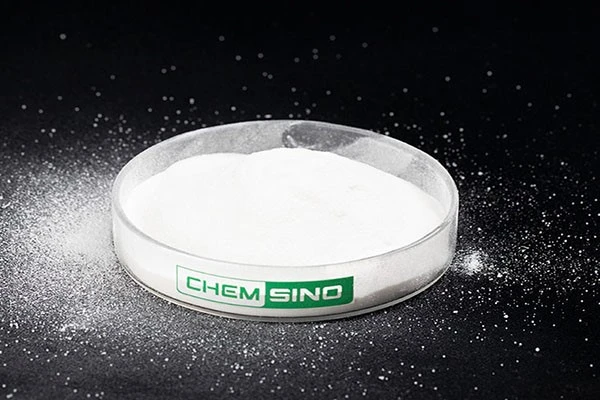
Sodium Stearoyl Lactylate (SSL) is produced by reacting stearic acid with lactic acid, then forming the sodium salt. The result is a pale cream to white powder with a melting point of approximately 46°C.
SSL is an anionic emulsifier - it carries a negative charge at typical food pH values. Its HLB is approximately 21, making it strongly hydrophilic despite having a C18 fatty acid chain. This combination - lipophilic tail, hydrophilic ionic head - is what allows SSL to interact with both gluten proteins and starch in bakery systems.
EU designation: E481. FDA: 21 CFR 172.846.
What CSL Is?
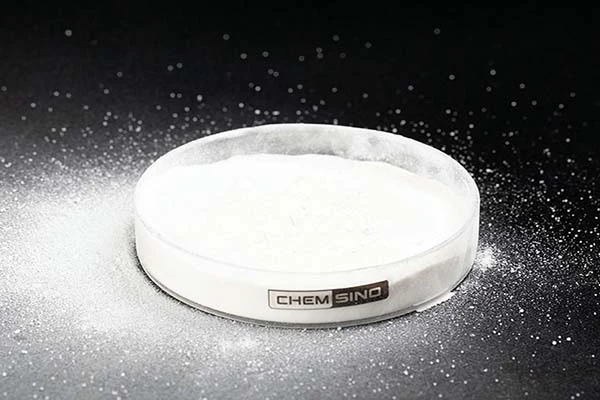
Calcium Stearoyl Lactylate (CSL) (also called Calcium Stearoyl-2-Lactylate) is produced by the same reaction as SSL - stearic acid reacted with lactic acid - but forming the calcium salt instead of the sodium salt. It is also a white to cream powder with a similar melting point.
CSL is also an anionic emulsifier, but the calcium counterion produces a different molecular geometry and different interactions with proteins and starch.
EU designation: E482. FDA: 21 CFR 172.844.
SSL vs CSL: The Main Difference
|
Property |
SSL |
CSL |
|
Full name |
Sodium stearoyl lactylate |
Calcium stearoyl lactylate |
|
E-number |
E481 |
E482 |
|
Salt form |
Sodium |
Calcium |
|
Water dispersibility |
Generally higher |
Generally lower |
|
Main bakery role |
Emulsifier and dough conditioner |
Emulsifier and dough conditioner |
|
Common focus |
Dough strength, gas retention, processing performance |
Dough strength and processing tolerance |
|
Suitable for |
Bread and other bakery products |
Bread and other bakery products |
This does not mean that SSL is always better than CSL. It means you should evaluate the two ingredients based on the actual formulation.
The Chemistry Behind the Difference
SSL and CSL share the same stearoyl lactylate backbone. The only structural difference is the counterion: SSL carries a sodium ion (Na⁺), CSL carries a calcium ion (Ca²⁺).
This single difference has several downstream consequences:
Molecular geometry. Calcium is divalent - it bridges two stearoyl lactylate molecules. This produces a bulkier, more rigid molecular structure than sodium's monovalent coordination. The different geometry affects how the molecule adsorbs to protein and starch surfaces.
Water solubility. SSL is more water-soluble than CSL. SSL disperses readily in warm water and dough at processing temperatures. CSL disperses more slowly and less completely - it requires adequate mixing time and temperature to distribute evenly.
Gluten interaction. Both interact with gluten proteins, but SSL produces a stronger gluten-strengthening effect because it is more water-soluble and has a more accessible anionic head group. CSL produces a milder, more moderate effect on gluten rheology.
Protein interaction in non-bakery systems. CSL interacts with proteins differently than SSL - its divalent calcium bridges can cross-link proteins under certain conditions, which produces different texture effects in dairy and other protein-containing systems.
What SSL Does in Bakery?
SSL's primary function is gluten strengthening. It binds directly to gluten proteins - particularly glutenins - forming hydrogen bonds and hydrophobic interactions that tighten the gluten network.
A stronger gluten network produces:
# Higher loaf volume and better oven spring
# Improved gas retention during fermentation
# More uniform crumb structure
# Greater tolerance to process variation - slight over-mixing, temperature fluctuation, or fermentation time variation affects SSL-containing dough less than unsupported dough
SSL also has a secondary effect on dough conditioning - it improves dough machinability, reduces stickiness, and contributes to a more consistent dough feel across production batches.
Typical dosage: 0.25–0.5% flour basis in standard bread. 0.4–0.6% in high-protein bread with added whey, soy, or pea protein, where protein dilutes gluten and SSL compensates.
SSL should be added at the start of mixing - before fat - to maximize contact time with gluten proteins before the network develops.

What CSL Does in Bakery?
CSL performs a similar but milder version of SSL's gluten-strengthening function. It also contributes to crumb softening - particularly in soft, enriched products - where its interaction with starch and fat produces a tenderer texture than SSL at the same addition level.
CSL appears most commonly in:
Soft rolls, brioche, and sweet doughs. CSL's milder gluten effect and crumb-softening contribution are well-suited to products that need some structure but not the tight, high-volume crumb that SSL optimizes for. It produces a more tender, slightly richer texture in enriched doughs.
Tortillas and flatbreads. CSL at 0.25–0.5% flour basis improves rollability - tortillas stay pliable and don't crack during folding. This is one of the applications where CSL is often preferred over SSL, because SSL's stronger gluten-tightening effect can make tortilla dough less extensible.
Products where sodium content is a formulation concern. CSL contributes calcium rather than sodium to the finished product's mineral content - relevant where sodium reduction targets apply.
Typical dosage: 0.25–0.5% flour basis, similar to SSL.

SSL or CSL: Which One Should You Choose?
The choice should start with the problem in your formulation.
Choose SSL When Dispersion and Dough Conditioning Are Important
SSL is often a practical choice when the formulation requires good dispersion and strong dough-conditioning performance.
For example, if the manufacturer is developing a bread formula and wants to improve dough tolerance and gas retention, SSL can be one of the first emulsifiers to test.
Its relatively good water dispersibility can also make handling easier in some production systems.
Consider CSL When the Formula Benefits From Its Specific Dough-Strengthening Behavior
CSL can also improve dough strength and processing tolerance, but its lower water dispersibility means that the way it is incorporated into the formula may need more attention.
It can be useful in bread and other yeast-leavened bakery products where the manufacturer wants to modify dough strength and processing characteristics.
The final decision should be based on trial results rather than the assumption that one ingredient is universally superior.
Frequently Asked Questions
What is SSL in food?
SSL is sodium stearoyl lactylate, a food emulsifier commonly used in bakery products as an emulsifier and dough conditioner.
What is CSL in food?
CSL is calcium stearoyl lactylate, a food emulsifier used mainly in bakery applications to support dough strength and processing performance.
What is the difference between SSL and CSL?
SSL is the sodium salt of stearoyl lactylate, while CSL is the calcium salt. SSL generally has better water dispersibility, while CSL has different physical and functional behavior because of its calcium salt form.
Is SSL better than CSL for bread?
Not necessarily. Both can be useful in bread, but the better choice depends on the flour, recipe, processing conditions, target texture, and required dough performance.
Can SSL replace CSL?
It can sometimes be used as an alternative, but it should not be assumed to be a direct one-to-one replacement. A formulation trial is recommended when switching between SSL and CSL.
What are E481 and E482?
E481 is sodium stearoyl lactylate (SSL), and E482 is calcium stearoyl lactylate (CSL).
You Might Also Like
-

Professional Glycerin Monostearate GMS High Iodine Value ...
-
Thickening Dressings And Condiments CAS NO. 123-94-4
-

Polysorbate 60 Is The Best Choice For Emulsifying Fragrances
-

Top Supplier Glycerol Monostearate 52 Powder GMS 52 Powde...
-

High Quality Whipping Cream Powder For Baking
-

Bakery Emulsifier SSL E481 For Enhanced Crumb Structure