
What are the common application scenarios of potassium stearate?
Sep 26, 2022
As the anionic surfactant, potassium stearate is widely used in acrylate rubber soap/sulfur combined vulcanization systems. Anionic surfactants. Often referred to as potassium soap or soft soap, it is mainly used in creams and shampoos, as emulsifiers and detergents. It has high emulsification efficiency but is sensitive to hard water, and can form calcium soap with hard water, which can deform or destroy the emulsion. It is a calcium-sensitive emulsifier, so it should be paid attention to in the production process of cosmetics.

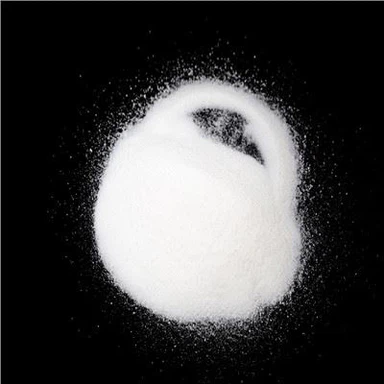
Potassium stearate is also known as "potassium octadecate". White crystalline powder, smooth to the touch, no sandy feeling, fatty odor, soluble in hot water or alcohol, slowly soluble in cold water, insoluble in ether, chloroform, and carbon disulfide, obtained from the neutralization reaction of stearic acid and potassium hydroxide. The aqueous solution is strongly alkaline to both litmus and phenolphthalein, but the ethanol solution is only slightly alkaline to phenolphthalein. The solution is alkaline due to hydrolysis.
1. Preparation of composite anti-caking agent for food-grade potassium chloride
To reduce the possibility of high blood pressure, it is allowed to add some potassium chloride to replace sodium chloride in the salt. However, in the process of storage and transportation of potassium chloride, the water contained in the product promotes the dissolution and recrystallization of the powder surface, thus forming crystal bridges at the pores of the powder.
Over time, these crystals combine, gradually forming huge clumps. Reduced mobility affects its use in table salt. Therefore, to prevent agglomeration, it is necessary to add an appropriate amount of anti-caking agent during the production process.
Provided is a composite anti-caking agent used in food-grade potassium chloride, which is non-toxic, harmless, colorless, and tasteless.
Technical scheme: a composite anti-caking agent for food grade potassium chloride, which is composed of D-mannitol, potassium stearate, and calcium dihydrogen phosphate, wherein D-mannitol, potassium stearate, and phosphoric acid The specific gravity of calcium dihydrogen is (1.25~5):(0.1~0.4):1. The purity of the D-mannitol, potassium stearate and calcium dihydrogen phosphate are all food grade.
Add method, including the following steps:
Step 1. Mix and pulverize D-mannitol, potassium stearate, and calcium dihydrogen phosphate with a ratio of (1.25-5): (0.1-0.4): 1 to form a composite anti-caking agent;
Step 2, the composite anti-caking agent and potassium chloride finished product is uniformly mixed with mass ratio 1: (10~100), to form a semi-finished product;
Step 3, Add the semi-finished product to the potassium chloride just after drying, and add a mass ratio of 1: (20-200).
A wet method for adding a composite anti-caking agent for food-grade potassium chloride comprises the following steps:
Step 1. Mix and pulverize D-mannitol, potassium stearate, and calcium dihydrogen phosphate with a ratio of (1.25-5): (0.1-0.4): 1 to form a composite anti-caking agent;
Step 2, uniformly mix the composite anti-caking agent and water with a mass ratio of 1: (100~200) to form an aqueous solution of the anti-caking agent;
Step 3, adding the anti-caking agent aqueous solution to the mother liquor of potassium chloride recrystallization, the mass proportion of the composite anti-caking agent and the potassium chloride finished product is 1:5000~10000.
2. Preparation of high molecular polyethylene polypropylene waterproof membrane
Polyethylene polypropylene fiber is a new material that has been used in recent years. Polyethylene polypropylene fiber is a kind of multi-poly It is a polymer polyethylene polypropylene composite waterproof roll material with one layer as a whole.
It has the characteristics of a large coefficient of friction, good stability, high mechanical strength, a small coefficient of linear expansion, wide temperature adaptability, excellent chemical resistance, weather resistance, and flexibility. It is an ideal new-century green product. Include the following preparation steps:
1) Weigh the raw materials according to the following parts by weight: 80-130 parts of polyethylene resin, 10-20 parts of talc, 5-10 parts of silica fume, 5-10 parts of glass microbeads, 8-16 parts of potassium stearate, carboxyl group 8-18 parts of styrene-butadiene latex, 10-20 parts of the anti-aging agent;
2) Put talc, silica fume, potassium stearate, and carboxylated styrene-butadiene latex into the high-speed mixer, raise the temperature to 70-80°C, stir at a high speed for 8-18min, and then raise the temperature to 95-100°C after, adding polyethylene resin and glass microbeads, stirring at high speed for 10-20min to obtain a mixture;
3) Put the mixture into the feeding area, extrude it, make the polypropylene cloth and the plastic sheet completely compound through the three-roller machine, pass through the guide roller to the tractor, trim the edges, and enter the coiler to obtain the product.