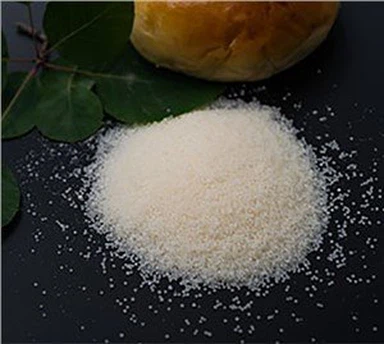

What are propylene glycol esters used for?
Aug 15, 2022
At a time when food safety is very important, consumers' brains can easily associate "propylene glycol" with chemicals, and at the same time feel confused: what exactly is propylene glycol? Is this food harmful to human health after eating it?
What is Propylene Glycol? Can it be used in food?
Propanediol includes 1,2-propanediol and 1,3-propanediol, both of which are colorless viscous liquids, almost tasteless and odorless, and less toxic and irritating. Propylene glycol is an important raw material for unsaturated polyester, epoxy resin, polyurethane resin, plasticizers, and surfactants. The amount used in these aspects accounts for about 45% of the total amount of propylene glycol, and unsaturated polyester is widely used in the production of chemical products such as surface coatings and reinforced plastics. Propylene glycol has good viscosity and hygroscopicity and is widely used as a hygroscopic agent, antifreeze, lubricant, and solvent in the food, pharmaceutical, and cosmetic industries. In the food industry, propylene glycol ester is a lipophilic food additive, which is obtained by distilling propylene glycol and stearate after esterification. It is a multi-purpose emulsifier.
In the field of food, propylene glycol esters are used as food additives, which belong as stabilizers and coagulants, anti-caking agents, defoaming agents, emulsifiers, moisture retention agents, and thickeners.
To sum up, the use of propylene glycol esters in food has the following advantages: one is to make the food taste better and keep it for a longer time; the other is to increase the water retention of the food and reduce the cost of food production, such as increasing the water content of the cake.

1. Can be used for cakes and fried potato chips, the maximum dosage is 2.0g/kg. For compound seasoning, the maximum dosage is 20g/kg.
2. The maximum dosage of fat, oil, and emulsified fat products is 10.0g/Kg, the maximum dosage of milk and dairy products, and frozen drinks is 5.0g/Kg, and the compound seasoning is 20g/kg of cakes, puffed foods, cooked nuts, and seeds and The maximum amount of fried snacks is 2.0g/Kg
3. It is used as an emulsifier, defoamer, and stabilizer. As an emulsifier, the HLB value is small and the emulsification activity is not strong. It is rarely used alone.
4. Propylene glycol has the characteristic that it tends to α-crystal form, and can stabilize the α-crystal form of other emulsifiers (such as monoglycerides) so that monoglycerides can maintain or delay the α-crystal form to β-crystal. type conversion, so that it has good emulsion stability.
5. Can be used in margarine to prevent water separation and splashing. Used in shortening, it can prevent the aging of bread, pastry, etc., and improve its manufacturing process. Used in ice cream to improve expansion and shape retention.
6. It has a good aeration ability and forms a light and stable foam, so it has a broad market in foods such as shortbread, cheese bread, and cake topping cream. Used for milk and dairy products (except varieties involved in 01.01.01, 01.01.02, and 13.0), fat, oil and emulsified fat products, frozen drinks (except edible ice in 03.04), cooked nuts and seeds (limited to fried nuts), and seeds), fried flour products, cakes, compound seasonings, puffed food, the maximum usage is 20g/kg.