

What is the Use of CMC Cellulose
Dec 17, 2024
CMC Cellulose is a widely used polymer, derived from natural cellulose and chemically modified to enhance its properties. As a thickener, emulsifier, and stabilizer, CMC improves texture, enhances freezing and melting stability, boosts flavor, and extends shelf life. This article explores the diverse applications of CMC in food production.
What is CMC Cellulose?
Sodium Carboxymethyl Cellulose (CMC), also known as Cellulose Gum, is a carboxymethylated derivative of cellulose. CMC Cellulose is one of the most common ionic types of cellulose gum. It is produced by reacting natural cellulose with caustic soda and monochloroacetic acid, resulting in an anionic polymer compound.
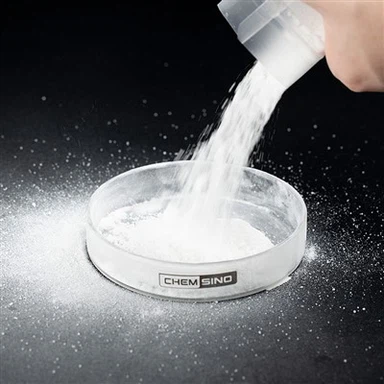
CMC appears as a white or slightly yellow powder. It is a macromolecule capable of absorbing water and swelling. When dissolved in water, it forms a transparent, viscous gel, and the pH of its aqueous suspension typically ranges from 6.5 to 8.5. It is insoluble in organic solvents such as ethanol, ether, acetone, and chloroform.
CMC Cellulose is widely used across various industries, including petroleum, geology, daily chemicals, food, and pharmaceuticals, due to its unique properties such as thickening, bonding, film-forming, water retention, emulsification, and suspension. Additionally, it is non-toxic, odorless, not prone to fermentation, and has good heat stability. For these reasons, it is often referred to as "industrial MSG."

What is the Use of CMC Cellulose?
1. CMC Cellulose in Fat-Protein Beverages
Carboxymethyl cellulose (CMC) can provide emulsification stability in beverages containing oil and protein. This is because when CMC dissolves in water, it forms a transparent, stable colloid. Protein particles, protected by the colloidal membrane, become particles with the same charge, which helps keep them stable. Additionally, CMC Cellulose has some emulsifying properties, which reduce the surface tension between fat and water, allowing for better emulsification of fat. It also stabilizes products by forming a complex with proteins, especially when pH deviates from the protein's isoelectric point.
2. CMC Cellulose in Ice Cream
When added to ice cream, CMC Cellulose can increase its expansion, improve the melting rate, provide a smooth texture, and enhance the mouthfeel. It can also control the size and growth of ice crystals during transportation and storage. The recommended usage is typically 0.5% of the total weight. This is because CMC thickener has good water retention and dispersibility. It helps organically combine the protein particles, fat globules, and water molecules in the colloid to form a uniform and stable system.
3. CMC Cellulose in Bread Making
CMC's hydrophilic and rehydration properties are commonly used in bread production. It can make the honeycomb structure uniform, increase the volume, reduce crumbs, and also has the functions of heat preservation and freshness preservation. Noodles added with CMC have good water-holding capacity, are resistant to boiling, and taste good. This is determined by the molecular structure of CMC. As a cellulose derivative, there are a large number of hydrophilic groups, namely -OH groups and -COONa groups, in its molecular chain. Therefore, CMC Cellulose has better hydrophilicity and water-holding capacity than cellulose.

4. CMC Cellulose in Jelly and Jam
CMC Cellulose is commonly used in jelly and jam production to enhance texture and stability. It improves gel formation, increases viscosity, and prevents syneresis (liquid separation), ensuring a smooth and consistent product. CMC thickener also helps with water retention, extending shelf life and maintaining quality during storage. Its ability to stabilize the texture and prevent crystallization makes it essential for producing high-quality, uniform jelly and jam with desirable spreadability and mouthfeel.
5. CMC Cellulose in Wine Production
CMC Cellulose can be used in alcoholic beverage production to enhance the richness and complexity of the flavor and improve the aftertaste. In beer production, sodium CMC can act as a foam stabilizer, enriching the foam and prolonging its persistence, thus improving the taste. CMC is a polyelectrolyte, which in wine, may participate in maintaining various balances in the wine, as well as interacting with pre-existing crystals. CMC Cellulose alters the structure of the crystals, changing their presence conditions in the wine and promoting the aggregation of precipitates.
Is CMC Natural or Synthetic?
Carboxymethyl cellulose (CMC) is synthetic. Although it is derived from natural cellulose (usually from wood or cotton), the process of making CMC involves chemically modifying the cellulose through reaction with chloroacetic acid and alkali, which introduces carboxymethyl groups into the cellulose structure. This chemical modification makes CMC a synthetic polymer, though it retains some properties of natural cellulose.
Final Insights
Carboxymethyl cellulose (CMC) stands as a remarkable substance in the industrial and food sectors. Whether it's optimizing the texture and stability of food products, from beverages to ice creams and bread, or finding applications in industries like petroleum and pharmaceuticals, CMC thickener continues to prove its versatility and significance.
If you have any relevant wholesale plan for Carboxymethyl Cellulose (CMC), don't hesitate to get in touch with CHEMSINO. We can provide you with detailed information and free samples to help you better understand our high-quality CMC products and their potential applications in your business.
You Might Also Like
-

China Anti-mold Agent Natamycin CAS No.:7681-93-9
-

Beyond Expectations: Carrageenan's Marvelous Role in Cosm...
-
Thickening Dressings And Condiments CAS NO. 123-94-4
-

Biocompatibility Pharmaceutical Excipients CAS NO.26402-22-2
-

Sodium Stearoyl Lactylate SSL80% As A Key Ingredient For ...
-

The Versatile Applications Of Polysorbate 20 in The Chemi...