
What is the introduction of ethyl vanillin?
Jun 20, 2022
Property Description:
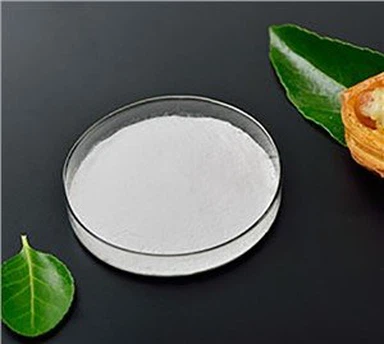
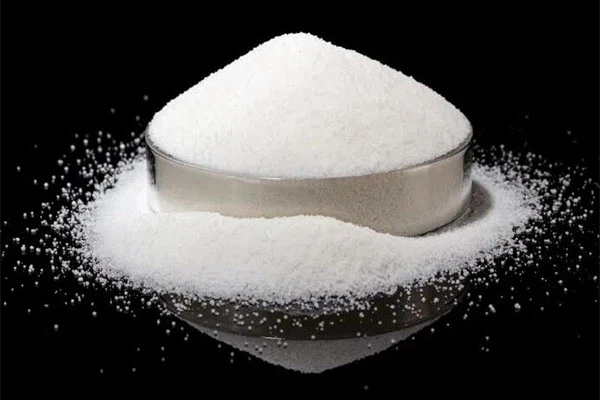
White to slightly yellow scaly crystals or crystalline powder, with a sweet chocolate aroma and strong unique aroma of vanillin, the aroma is 3~4 times stronger than vanillin. It can be gradually oxidized when exposed to light and air. The aqueous solution is acidic. Boiling point 285°C. Soluble in ethanol, ether, glycerol, propylene glycol, chloroform, and alkali hydroxide solution, slightly soluble in water (1.3% at 50°C). No natural products.
Production Method:
This method is similar to the process of vanillin. Ortho-ethoxyphenol can also be reacted with glyoxylic acid, and then heated and oxidized with copper oxide and caustic soda aqueous solution to generate ethyl vanillin. Not only vanillin but also ethyl vanillin can be produced from safrole. The alcohol solution of safrole (4-allyl-1,2-methylenedioxybenzene) and potassium hydroxide is heated in an autoclave to destroy its dioxygen ring. Then, the etherification was carried out by heating 2-3 Chemicalbookh with sodium ethyl sulfate and 50% potassium hydroxide solution of the product at 150-155°C. The etherified phenolic mixture is dissolved in 50% ethanol, and then a small amount of sulfuric acid is added to reflux and heat to make it hydrolyzed to generate concentrated vanillin and isoeugenol. The former is precipitated as scaly crystals, filtered, and recrystallized with 50% ethanol to obtain a pure product. The isoeugenol was separated from the filtrate, dissolved in 10% sodium hydroxide solution, added with sodium m-nitro benzenesulfonate, and heated under reflux for 3 hours. After cooling, it was acidified with dilute sulfuric acid to generate ethyl vanillin. Use benzene to extract and acidify the resulting oil, then extract with 35% sodium bisulfite solution, and recrystallize after acidification to obtain the finished product.
Preparation:
1. Condensation reaction. 140gz of water, 4g of NaOH (0.1mol), and 20.7g of o-methoxyphenyl (0.15mo) were added to the flask, stirred, and heated to 52°C. Weigh 15.7g glyoxylic acid (0.1mol) and adjust pH=5 with 45g NaOH (10%) to prepare sodium glyoxylate solution.
The sodium glyoxylate solution and 30g NaOH (10%) were respectively added to two constant pressure funnels and were added dropwise to the reaction solution at the same time, and the dropwise addition time was about 1h. After the dropwise addition was completed, the reaction was continued for 5h. The pH of the reaction solution was adjusted to 4.5~5 with sulfuric acid, and the excess o-ethoxyphenol was recovered with toluene. The aqueous phase can be directly oxidized in the next step, or it can be acidified with sulfuric acid to pH=1~2, then acidified with acetic acid.
Extraction with ethyl ester and evaporation with a rotary evaporator yields light red 3-ethoxy-4-hydroxymandelic acid.
2. Oxidative decarboxylation reaction. 150 g of water and 50 g of copper sulfate pentahydrate (0.2 mol) were added to the flask and stirred to dissolve. Add 20g NaOH (0.5mol) and condensation reaction solution, and adjust to pH=13.5. Heated to 80°C and reacted for 8h. After the oxidation reaction finishes, be cooled to 60 ℃, suction filtration while hot, and remove reduced product cuprous oxide, the cuprous oxide can be regenerated with 30% hydrogen peroxide. The filtrate was heated to 60°C, adjusted to pH=4~5 with sulfuric acid, and decarboxylated for 0.5h, the reaction solution was extracted with ethyl acetate, and evaporated with a rotary evaporator to obtain ethyl vanillin.
Quality Standard
Content ≥99%
Melting point 81.0-83 0°C
Arsenic content ≤0.0003%
Heavy metal ≤0.001%
High boiler ≤0.1%
Loss on drying ≤0.5%
Content analysis:
After drying the sample in phosphorus pentoxide for 4 hours, accurately weigh about 300 mg of the sample, put it into a 125 ml conical flask, and dissolve it in 50 ml of dimethyl methylamine. Add 3 drops of thymol blue test solution (TS-247), and titrate with 0.1mol/L sodium methoxide under magnetic stirring and measures to prevent carbon dioxide in the atmosphere. At the same time, a blank test was performed. Each Ml of 0.1 mol/L sodium methoxide is equivalent to 16.62 mg of ethyl vanillin (C9H10O3).
Use:
Ethyl vanillin is a broad-spectrum spice and is one of the most important synthetic spices in the world today: it is an indispensable and important raw material in the food additive industry. Its aroma is 3-4 times that of vanillin, and it has strong vanilla. Bean aroma and long-lasting fragrance. The amount used in chocolate is 250mgkg; 110mgkg in gum; 100mgkg in alcoholic beverages; 74mg/kg in cloth J; 65mgkg in candy; 63mgkg in baked food; 47mgkg in cold drinks; and 20mg/kg in soft drinks. Today, when green food is advocated, it has become a development trend to replace methyl vanillin with ethyl vanillin in food, feed, and other industries.

It is widely used in food, chocolate, ice cream, beverages, and daily cosmetics to enhance and fix fragrance. In addition, ethyl vanillin can also be used as a feed additive, a brightener in the electroplating industry, and an intermediate in the pharmaceutical industry.
Mainly used for the preparation of vanilla, chocolate and soda, ice cream, and other flavors. According to the provisions of FAO/WHO (1983): it can be used for canned baby food and cereal processed products for infants and young children, and the maximum allowable dosage is 70mg/kg (referring to grain food); Cocoa powder and sugar-sweetened cocoa powder, chocolate, cocoa liquor, cocoa cakes, cocoa-coated products (in a small amount for flavoring), and cream, in quantities subject to processing requirements (GMP). Uses This product has the aroma of vanillin, but it is more elegant than vanillin, and the aroma intensity is 3-4 times higher than that of vanillin. , cosmetics, tobacco. Oral LD50 in rats is >2000mg/kg.
In pharmaceutical manufacturing, it is mainly used as a flavoring agent and a fragrance and is mostly used in liquid preparations containing glycerol and ethanol as diluents, and also in semi-solid preparations and solid preparations, such as creams and granules. In the food industry, the field of use is the same as that of vanillin, and it is especially suitable for the flavoring agent of milk-based food, which can be used alone or in combination with vanillin and glycerin. In the daily chemical industry, it is mainly used as a fragrance for cosmetics. Ethyl vanillin has the aroma of vanillin, but it is more elegant than vanillin, and the aroma intensity is 34 times higher than that of vanillin. , cosmetics, tobacco.