


Making Stable And Creamy Emulsions With Sorbitan Esters CAS NO.1338-41-6
Sorbitan esters are a popular emulsifying agent that can help to form stable and creamy emulsions.
- Fast Delievery
- Quality Assurance
- 24/7 Customer Service
Product Introduction
Product Introduction
Emulsions are mixtures of different liquids that are kept stable by an emulsifying agent. They're used a lot in industries like food, cosmetics, medicine, and farming. Keeping emulsions stable is really important for making good products that last a while and work well. Sorbitan esters are a popular emulsifying agent that's great for making creamy and stable emulsions.
Products Parameters
| CHEMICAL/PHYSICAL SPECIFICATIONS | ||
| Fatty acid | 71~75 | w/% |
| Sorbitol | 29.5~33.5 | w/% |
| Acid value | ≤10.0 | mg KOH/g |
| Saponification value | 147~157 | mg KOH/g |
| Hydroxyl value | 235~260 | mg KOH/g |
| Moisture | ≤1.5 | w/% |
| HEAVY METAL SPECIFICATIONS | ||
| Arsenic Pb |
≤ 3 ≤ 2 |
mg/kg mg/kg |
Features
Sorbitan esters are derived from sorbitol, which is a natural sugar alcohol. Sorbitan esters are a family of nonionic surfactants that are commonly used in the food and cosmetic industries. Sorbitan esters have a hydrophilic head and a lipophilic tail, which allows them to interact with both water and oil phases in an emulsion. Sorbitan esters can form a stable interface between water and oil phases, preventing droplets from coalescing and separating.
Application
There are many types of sorbitan esters, such as sorbitan monolaurate (Span 20), sorbitan monopalmitate (Span 40), sorbitan monostearate (Span 60), and sorbitan trioleate (Span 85). Each type of sorbitan ester has a different hydrophilic-lipophilic balance (HLB) value, which determines its emulsifying properties. Sorbitan esters with lower HLB values are more lipophilic and can form oil-in-water emulsions, while sorbitan esters with higher HLB values are more hydrophilic and can form water-in-oil emulsions.
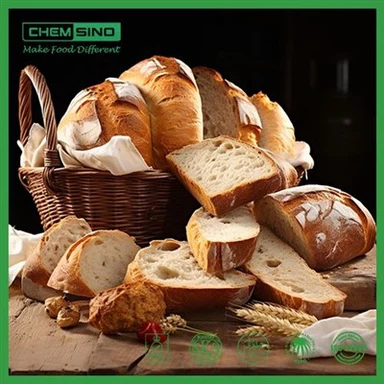
In the food industry, sorbitan esters are widely used as emulsifiers in various products such as margarine, mayonnaise, ice cream, and bakery products. Sorbitan esters can improve the texture, appearance, and shelf life of these products by forming stable and creamy emulsions. For example, sorbitan monostearate (Span 60) is often used in ice cream to prevent ice crystal formation and improve the smoothness and creaminess of the product.
In the cosmetic industry, sorbitan esters are commonly used as emulsifiers in creams, lotions, and other personal care products. Sorbitan esters can help to form stable and homogeneous emulsions that provide a pleasant texture and appearance. Sorbitan monostearate (Span 60) is often used in skin creams and lotions to create a smooth and creamy texture.
Package
200kg/iron drum or 1000kg/IBC drum
20GP: 80 iron drum(16mt) or 20 IBC drum(20mt)
Advantages & Characteristics
- Kosher/Halal/ISO9001/ISO22000/RSPOCerificated
- No MOQ,More Opportunities
- Customized Products
- Mixed Shipment

FAQS
Q: Can i get your COA,TDS and MSDS?
Q: Do you have the RSPO certificate?
Q: Can you do the customized package?
Q: How long of the delivery time?
Q: Can i get the free sample?
Q: How about the MOQ?
Q: How about the payment items?
Q: Which country have you exported to?
Q: Can i visit your factory?
Q: Can you support us in the applications?
Q: Can you accept the inspection from a third party?
Hot Tags: making stable and creamy emulsions with sorbitan esters cas no.1338-41-6, China, suppliers, manufacturers, factory, customized, wholesale, price, quotation, free sample, Kosher Halal, in food industry, food grade additives, buy Tween 60, tween 80 powder, E472e in cakes, sodium stearoyl lactylate in skin care, Polysorbate60, monopropylene Glycol in bakery
You Might Also Like
-

The Trusted Emulsifier: Sorbitan Esters Sorbitan Mon...
-

Propylene Glycol Industrial CAS:57-55-6
-

Using DATEM To Replace Synthetic Emulsifiers in Food...
-
Lactic Acid Esters of Mono-Di Glycerides (Lactem) em...
-

Distilled Monoglyceride DMG Tablets For Skin Care CA...
-

Emulsifier MPG Food Grade Liquid For Flavorings CAS ...
